
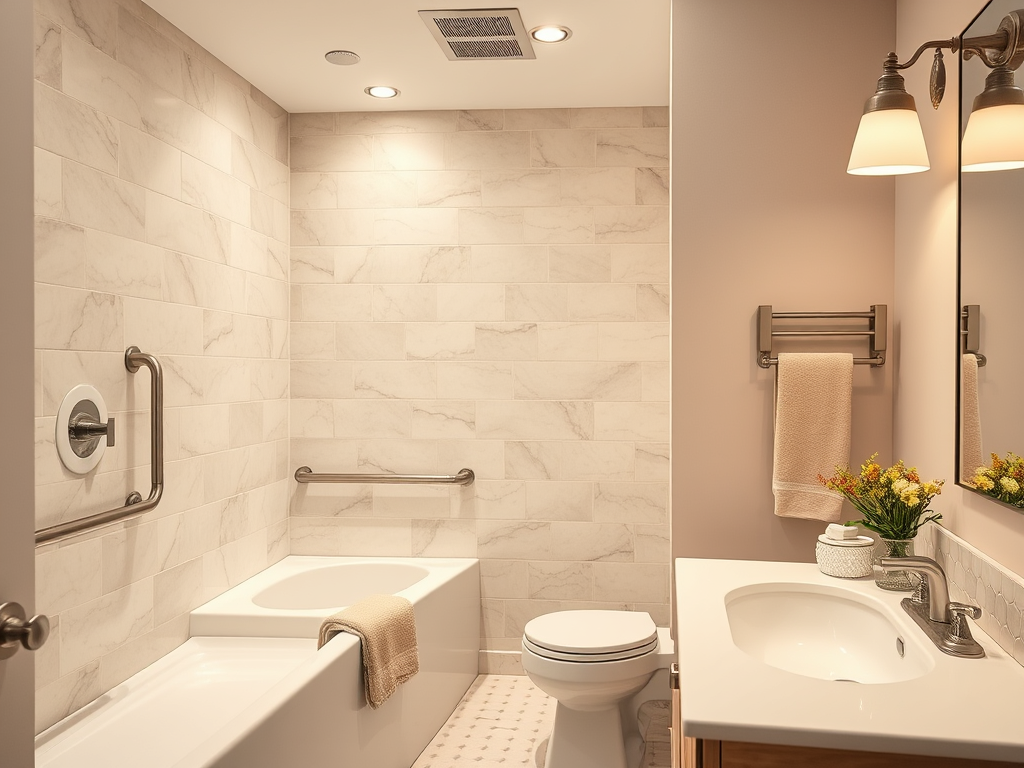
The desire to “age in place”—remaining independent and comfortable in one’s own home—is a top priority for most seniors and their families in the Knoxville area. However, homes built decades ago rarely meet the mobility needs of aging adults.
Making a home truly accessible requires thoughtful planning, budgeting, and a clear understanding of which modifications deliver the greatest impact on safety and independence. PropertyWorx Solutions specializes in these critical upgrades.
Here is a guide to prioritizing your home modifications, along with a look at the typical cost ranges for various projects.
The Three Tiers of Accessible Modification
Accessible home modifications can be broken down into three main categories based on complexity and cost. When planning, focus on Tier 1 (Safety First) before moving to Tiers 2 and 3.
Tier 1: Essential Safety & Fall Prevention (Typically $100 – $1,000)
These are the most common and highest-impact modifications, often requiring only a skilled handyman. They directly address the most significant risk for seniors: falls.
| Modification | Priority Location | Purpose & Estimated Cost |
| Grab Bars | Bathroom (near toilet, inside shower/tub) | Provides immediate, crucial support for sitting, standing, and transfers. Must be professionally installed into wall studs. |
| Handrails | All steps (interior and exterior) | Necessary for stability on stairs. Install on both sides for maximum safety. |
| Lever Handles | All interior and exterior doors | Replace difficult-to-grip round doorknobs. Essential for those with arthritis or limited hand dexterity. |
| Better Lighting | Hallways, stairwells, entrances | Install brighter fixtures or motion-sensor lighting to reduce trips in low-light areas. |
| Non-Slip Surfaces | Bathrooms, kitchen, entryways | Securing loose area rugs or adding non-slip mats/coatings to slick floors. |
Tier 2: Enhanced Mobility & Functionality (Typically $500 – $8,000)
These changes address accessibility for walkers, canes, or early-stage wheelchair use. They are generally considered minor construction or specialized installations.
| Modification | Priority Location | Purpose & Estimated Cost |
| Exterior Ramps | Main entry door, garage door | Provides safe, no-step entry into the home. Requires a gentle slope (1:12 ratio) and handrails. |
| Threshold Ramps | Interior doorways | Small, beveled ramps to eliminate the lip/threshold, allowing easy passage for walkers/wheelchairs. |
| Comfort Height Toilets | All bathrooms | Taller toilet models (17-19 inches) that reduce the strain on knees and joints when sitting down or standing up. |
| Handheld Showerhead | All showers | Allows bathing while seated on a bench or stool. |
| Cabinet/Drawer Pulls | Kitchen and Bathroom | Replace knobs with easy-to-grab pull handles or install pull-out shelving for easier access. |
Tier 3: Structural & Major Accessibility (Typically $5,000 – $40,000+)
These are extensive renovations that often require a general contractor or specialized installer, though a handyman can manage the surrounding demolition and finishing work.
| Modification | Priority Location | Purpose & Estimated Cost |
| Roll-In/Curbless Shower | Main floor bathroom | Eliminates the barrier of a tub or shower curb, allowing wheelchair users or those with poor balance to safely roll or walk straight in. |
| Doorway Widening | Primary hallways, bedrooms, bathrooms | Widening doorways (often to 32–36 inches) is necessary to accommodate a wheelchair or larger walker. This involves modifying structural framing. |
| Stair Lift Installation | Main interior staircase | A motorized chair that transports a person up and down stairs. A necessary alternative if moving to a single level is not an option. |
| Lowered Countertops | Kitchen | Lowering a section of the countertop and removing the cabinet below to create knee space for food prep while seated. |
Budgeting and Financing Your Modifications
The full cost of modifications can range from a few hundred dollars for basic safety features to tens of thousands for major remodels. Planning ahead can make a significant difference.
| Funding Source | What it Covers | Notes |
| Out-of-Pocket | All projects | Most homeowners pay for small to medium-sized projects themselves. |
| Medicare/Medicaid | Durable Medical Equipment (DME) | Will not pay for structural changes (e.g., grab bars, ramps, stair lifts). May cover DME like hospital beds or wheelchairs. |
| VA Grants (HISA/SAH) | Structural alterations | Veterans may qualify for grants (like the Home Improvements and Structural Alterations – HISA) to cover medically necessary home mods. |
| Local/State Programs | Safety, Energy Efficiency | Check with Knoxville-area community development and senior services for limited local grants or low-interest loans. |
| Home Equity Loans (HELOC) | All projects | Common way to finance larger projects (Tier 3) by borrowing against the home’s value. |
Your Handyman Partner in Aging-in-Place
PropertyWorx Solutions specializes in the most critical Tier 1 and Tier 2 modifications, providing the professional installation required to guarantee safety. We ensure grab bars are mounted correctly, ramps meet safe slope guidelines, and essential lever handles are installed quickly.
Your home is your sanctuary. By addressing accessibility now, you invest in years of safety, comfort, and independence for yourself or your loved ones.
Ready to start your home safety assessment?
Would you like to schedule an assessment for installing grab bars and other essential safety features?

Leave a Reply